Private Yoga Class Guide: Benefits, Costs and Choosing the Right Teacher
Introduction: What a private yoga class is and why it matters
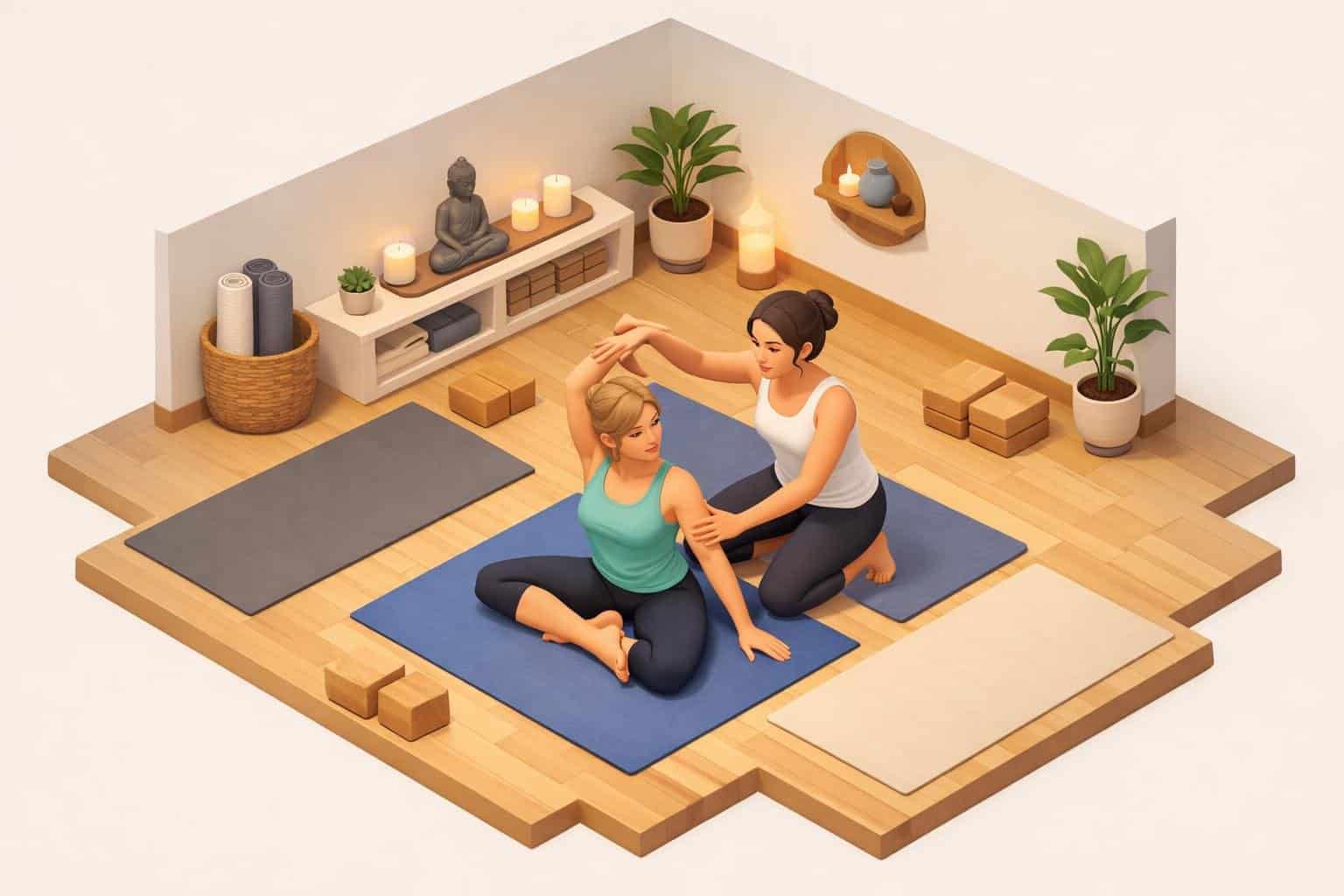
A private yoga class is a one-to-one or small-group session led by a qualified teacher that is tailored to the individual student’s body, goals and learning pace.
Unlike a standard drop-in group lesson, a private yoga class allows for focused instruction, personalised sequencing and real-time adjustments.
For students aiming to progress technical skill, manage injuries, or deepen practice efficiently, private lessons often offer a faster, safer route to measurable improvement. For a broader wellness perspective, BBC News on health and wellbeing can be a useful read.
Private versus group classes: direct comparison
Benefits of a private yoga class
A private yoga class delivers customised feedback on alignment, breathing and transitions, which accelerates motor learning and reduces the risk of reinforcing poor habits. Teachers can design progressive plans that build specific skills—such as arm balances, inversions or breath control—while accommodating flexibility, strength and any clinical considerations. The concentrated attention also helps clarify subtle cues and refine technique, which is valuable for students seeking skill improvement rather than general fitness.
Limitations and considerations
Private lessons typically cost more per hour than group classes and may feel less socially motivating for students who prefer community energy. Results depend heavily on teacher quality and the student’s commitment to practice between sessions. A good private programme requires clear communication of goals and consistent home practice to realise the full benefits.
Types of private yoga class
One-to-one private sessions
One-to-one classes are the most personalised format. The teacher observes the student’s movement patterns closely, offers hands-on adjustments where appropriate, and can tailor the session to therapeutic objectives or advanced technical goals. This format suits beginners with specific needs and intermediate-to-advanced students pursuing precise skill acquisition.
Semi-private or small-group private classes
Semi-private classes typically involve two to four students and combine personal attention with peer benefits like shared motivation. They are more cost-effective than solo lessons while still allowing teachers to customise cues and modifications for each participant.
Online and virtual private classes
Virtual private lessons have become viable alternatives when in-person meetings are impractical. With good camera setup and clear communication, teachers can assess alignment and provide verbal corrections and visual demonstrations. While hands-on adjustments are not possible, online classes increase access to specialised instructors who may be geographically distant.
How private classes accelerate skill development
Skill acquisition in yoga follows principles of deliberate practice: focused, repeated attempts with immediate feedback and progressive challenge. A private yoga class structures practice around these principles. The teacher identifies limiting factors—strength imbalances, range-of-motion restrictions, breath control or coordination—and designs drills and preparatory poses that target the root causes rather than just the visible symptoms.
Regular private lessons speed the feedback loop. Instead of waiting for a general cue in a group environment, a student receives precise corrections and alternative strategies tailored to their anatomy. This individualised coaching shortens the time needed to execute complex sequences safely and with greater confidence, improving both technical ability and self-awareness on the mat.
Cost, scheduling and value
Cost factors to expect
Prices for a private yoga class vary by region, teacher credentials, session length and location (studio, home visit or online). Experienced instructors and specialists (for example, physiotherapist-yoga teachers) command higher rates. Packages or multi-session discounts often reduce the per-class cost and encourage consistent practice.
Measuring value and return on investment
Value should be assessed against the student’s objectives: faster skill progress, injury rehabilitation, or tailored therapeutic outcomes. When a private programme reduces pain, prevents setbacks, or enables an advanced skill that would otherwise take many months in group settings, the higher hourly rate can represent strong value. Tracking measurable milestones—such as progressions achieved, pain reduction, or improved balance tests—helps quantify ROI.
Choosing the right teacher for a private yoga class
Credentials, experience and safety
When selecting a teacher for private work, look for appropriate training, liability coverage and experience relevant to the student’s goals. Teachers who hold 200–500 hour certifications, additional training in biomechanics or therapeutic yoga, or healthcare qualifications bring greater competence for technical coaching and injury-sensitive programming. A responsible teacher will take a thorough intake, ask about medical history and adapt the session accordingly.
Teaching approach, communication and trial sessions
Teaching style matters: some teachers favour hands-on adjustments, others prefer verbal cues and demonstrations. Clear communication about preferred feedback modes, realistic goal timelines and homework expectations avoids mismatch. Many teachers offer an initial trial private class or a short assessment session—these are useful to evaluate rapport, coaching clarity and whether the teacher’s approach matches the student’s learning style.
What to expect in a first private yoga class and how to prepare
The first private session usually begins with an intake discussion covering goals, injury history, daily activity and any posture concerns. The teacher will assess mobility, strength and movement patterns, then create a short sequence or drills that highlight priorities. Students should arrive with comfortable clothing, any relevant medical notes, and the readiness to be specific about objectives.
To maximise progress, students are advised to practise assigned drills between lessons, record short videos if practising at home (for teacher review), and maintain consistent scheduling. Clear goal-setting—whether it is to achieve a particular pose, reduce pain, or improve breathing for performance—helps both teacher and student measure progress over time.
References
1. Harvard Health Publishing. “Yoga: Fight stress and find serenity.” Available: https://www.health.harvard.edu/staying-healthy/yoga-benefits-beyond-the-mat (accessed 2026).
2. NHS. “Exercise: Why it matters.” Available: https://www.nhs.uk/live-well/exercise/ (accessed 2026).
3. Yoga Alliance. “Private Lessons and Managing Student Progress.” Available: https://www.yogaalliance.org/ (accessed 2026).
4. Cramer H, Lauche R, Haller H, Dobos G. “A systematic review and meta‑analysis of yoga for low back pain.” Available via Cochrane and PubMed (accessed 2026).